James Jamshed(JJ)
Thinker, Political Enthusiast & Writer of 100 Books
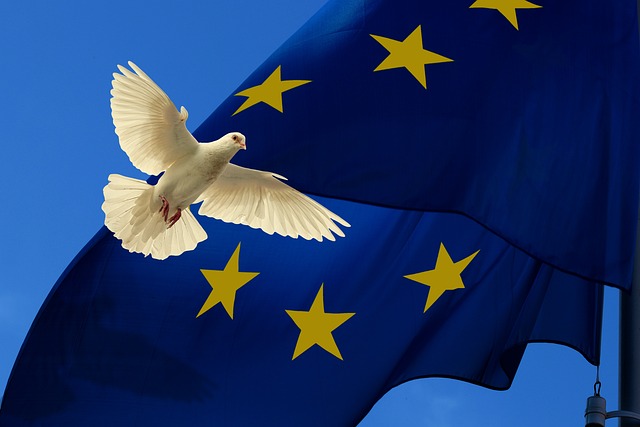
As the world steps deeper into the 2020s, global politics appears more fragmented, volatile, and unpredictable than at any point since the Cold War. The traditional architecture of power, long dominated by Western-led alliances, is now being challenged on multiple fronts—from the rise of China’s assertive diplomacy to the Global South's demand for a more equitable world order.
The world is no longer unipolar, and it’s not yet stable in multipolarity either. Instead, we find ourselves in a fluid, contested phase—a transition toward a yet undefined balance of power.
The West, led by the United States and Europe, is grappling with internal polarization, economic uncertainty, and declining moral authority on the global stage. From the wars in Iraq and Afghanistan to the handling of the Israel-Palestine conflict, the West's perceived double standards have eroded its legitimacy in the Global South.
Meanwhile, China continues to project influence through its Belt and Road Initiative (BRI), digital infrastructure diplomacy, and strategic investments in Africa, Latin America, and Southeast Asia. Russia, despite sanctions and isolation, has proven that military assertiveness and resource leverage can still reshape geopolitics, as seen in Ukraine and the broader Eurasian region.
The BRICS alliance—Brazil, Russia, India, China, and South Africa—has morphed from a loose economic concept into a political alternative to Western dominance. Recent expansions, including countries like Iran and Saudi Arabia, signal a growing coalition that aims to challenge the dollar-based economic system and push for a multipolar world.
This bloc isn’t ideologically unified, but it reflects a shared desire for sovereignty, economic independence, and reform of global institutions like the IMF, World Bank, and United Nations.
Technological dominance is now a central axis of global power. The U.S.-China tech rivalry, especially over semiconductors, AI, and 5G networks, signals a new form of Cold War—one defined not just by ideology, but by control over innovation, data, and digital infrastructure.
Countries are increasingly being pressured to choose sides in this techno-political divide. Meanwhile, cyberwarfare, misinformation, and surveillance have become the weapons of choice in a shadowy battlefield where traditional diplomacy has little sway.
Perhaps the most consequential development is the awakening of the Global South. Countries like Indonesia, Nigeria, Bangladesh, Mexico, and Turkey are asserting their roles not as pawns but as players in global decision-making.
This movement is less about aligning with either the West or East and more about demanding respect, equity, and voice. The call for climate justice, fair trade, and technology transfer is growing louder—and global forums like COP, G20, and UN summits must now listen.
The world faces multiple high-risk flashpoints: Taiwan, the South China Sea, Iran-Israel tensions, and the future of NATO in Eastern Europe. These are not isolated issues—they are interconnected tests of whether global diplomacy can prevent the outbreak of large-scale conflict.
Conclusion:
The post-Cold War dream of a peaceful, rules-based international order is fading. What replaces it is still unclear. But one thing is certain: the era of Western monopoly in global politics is ending, and the world is entering an era of contestation, negotiation, and power recalibration.
The question is not just who will lead the world, but what kind of world will be led. Will we see cooperation or confrontation? Inclusion or division? The answers depend not just on superpowers, but on how the emerging voices of the Global South shape the next chapter of global history.
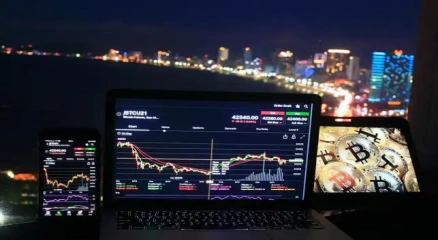
Global stock markets remained mixed today as investors weighed fresh U.S. inflation data, corporate earnings reports, and the ongoing economic uncertainty in China and Europe. The U.S. stock market opened slightly higher on Monday morning, with the Dow Jones Industrial Average rising 0.4%, the S&P 500 climbing 0.3%, and the Nasdaq Composite gaining 0.5% in early trading. Investors responded positively to June's U.S. Consumer Price Index (CPI) report, which showed inflation cooling slightly to an annual rate of 3.0%, down from 3.3% in May."Markets are optimistic that the Federal Reserve may pause or even cut interest rates by the fall," said Lisa Raymond, chief analyst at Morgan & Co. "But it's still a wait-and-see situation, especially with more earnings coming this week." Wall Street Opens Higher Dow +0.4%, S&P 500 +0.3%, Nasdaq +0.5% on Monday morning. Boosted by June CPI showing inflation cooled to 3.0% (down from 3.3%). Hopes rise for potential Fed rate cut or pause by fall. The U.S. stock market opened slightly higher on Monday morning, with the Dow Jones Industrial Average rising 0.4%, the S&P 500 climbing 0.3%, and the Nasdaq Composite gaining 0.5% in early trading. Investors responded positively to June's U.S. Consumer Price Index (CPI) report, which showed inflation cooling slightly to an annual rate of 3.0%, down from 3.3% in May. "Markets are optimistic that the Federal Reserve may pause or even cut interest rates by the fall," said Lisa Raymond, chief analyst at Morgan & Co. "But it's still a wait-and-see situation, especially with more earnings coming this week." Tech Leads the Way Technology stocks led the gains in the U.S., with Apple (AAPL) up 1.8% and Nvidia (NVDA) jumping 2.4%, as demand for AI and semiconductors remains strong. Tesla (TSLA) also rebounded, rising 3.1% after announcing better-than-expected Q2 vehicle deliveries. Global stock markets showed a mixed performance as investors weighed persistent inflation concerns against a wave of corporate earnings reports. While strong results from major tech companies helped lift some indexes, uncertainty surrounding central bank policies and the future path of interest rates kept others in check. In the U.S., Europe Struggles on Growth Concerns Meanwhile, European markets showed little movement, with the FTSE 100 in London flat and Germany’s DAX down 0.2%. Investors remain concerned about weak industrial output and rising energy costs across the Eurozone.“The European economy is showing signs of fatigue,” said Carla Dupont, economist at BNP Paribas. “High borrowing costs and geopolitical tensions are dragging down business activity.”Global stock markets showed a mixed performance as investors weighed persistent inflation concerns against a wave of corporate earnings reports. While strong results from major tech companies helped lift some indexes, uncertainty surrounding central bank policies and the future path of interest rates kept others in check. In the U.S., Market Performance Summary Table Region Index/Company Movement (%) Key Driver USA Dow Jones +0.4% Positive CPI report (3.0% inflation) S&P 500 +0.3% Rate cut optimism Nasdaq +0.5% Tech stock gains Apple (AAPL) +1.8% Strong AI demand Nvidia (NVDA) +2.4% Semiconductor growth Tesla (TSLA) +3.1% Strong Q2 deliveries Europe FTSE 100 (UK) 0.0% Flat due to economic uncertainty DAX (Germany) -0.2% Weak industrial output, high energy costs Asia Nikkei 225 (Japan) +0.6% Strong export performance Shanghai Composite -1.2% Property sector risks, low consumer spending Asia Mixed as Chinese Markets Slump In Asia, markets showed mixed results. Japan’s Nikkei 225 gained 0.6%, supported by strong export data. However, Chinese markets fell sharply, with the Shanghai Composite down 1.2%, as fears about the country’s property sector and sluggish consumer spending persisted. Gains in consumer and tech sectors pushed markets higher, but weaker-than-expected bank earnings and inflation-related jitters limited broader momentum. European markets edged lower as traders grew cautious about global trade tensions and slowing growth indicators, while Asian markets saw mixed results, with Hong Kong posting modest gains and Tokyo slipping slightly. Overall, market sentiment remains cautious as investors await further economic data and guidance from central banks. Looking Ahead Investors are now turning their focus to key corporate earnings this week from major banks like JPMorgan Chase, Goldman Sachs, and Citigroup, as well as tech giants like Netflix and Microsoft. The results are expected to provide a clearer picture of business resilience amid high interest rates and uncertain global demand. Overall, market sentiment remains cautious as investors await further economic data and guidance from central banks.
The U.S. Supreme Court issued a landmark ruling on Monday, declaring that former presidents are entitled to partial immunity from criminal prosecution for actions taken while in office. The 6-3 decision, split along ideological lines, has triggered intense political and legal debate across the country. The ruling stems from charges brought against former President Donald Trump, who has faced multiple indictments related to alleged interference in the 2020 presidential election and events surrounding the January 6 Capitol riot. The Court’s decision now makes it more difficult for prosecutors to pursue charges for actions deemed as part of a president's official duties. Heatwave Grips U.S. South and Midwest, Breaking Temperature Records Data Table Price Total 1200 1200 Ata Moyda Demographic Data District Population Percentage Noakhali 31,000,00 5% Cumilla 35,000,00 5.5% Divided Reactions President Joe Biden responded to the ruling by calling it a “dangerous precedent” that could place future presidents above the law. “No one in America should be beyond accountability,” he said during a press conference. Republican leaders, however, welcomed the decision. House Speaker Steve Scalise stated, “This ruling upholds the constitutional separation of powers and protects the office of the presidency from political attacks.” What the Ruling Means The Court ruled that while presidents do not have absolute immunity, they are shielded from criminal prosecution for actions that are “within the outer perimeter of official presidential responsibilities.” However, personal or unofficial actions remain subject to prosecution. Legal experts say the ruling could delay several of Trump’s ongoing legal cases, potentially impacting the 2024 election season, where Trump remains the leading Republican contender. Public Response Protests erupted in major cities including New York, Los Angeles, and Chicago, with citizens expressing fears that the decision could weaken American democracy. On social media, the hashtag #NoOneAboveTheLaw trended nationwide.
Tourism Rebounds Strongly in 2025 as Travelers Seek New Adventures Post-Pandemic The global tourism industry has entered a period of remarkable recovery in 2025, following several years of pandemic-related disruption. With the lifting of most travel restrictions, renewed consumer confidence, and a deep craving for exploration, tourism has surged across continents. Experts say this rebound is not merely a return to old patterns, but a reshaping of how people travel, what they value, and how the industry responds. International Travel Reaches Record Levels Countries around the world have seen a significant rise in international arrivals. Popular destinations like France, Thailand, Italy, and Mexico are reporting visitor numbers that not only match but exceed pre-pandemic figures. Airports are bustling, cruise ships are sailing at full capacity, and global airlines have reinstated and even expanded routes. This surge is being driven by both leisure and business travelers eager to reconnect with the world. Tourists Demand Deeper, More Meaningful Experiences Travelers in 2025 are no longer satisfied with generic sightseeing tours. There is a growing demand for immersive experiences—whether it's living with a local family in a remote village, joining a traditional cooking class, or volunteering in conservation projects. This shift reflects a deeper desire for cultural understanding, personal growth, and making lasting memories, rather than just collecting passport stamps. Technology Transforms the Travel Experience Advancements in technology have revolutionized every stage of the travel journey. From AI-powered itinerary planners and mobile boarding passes to biometric check-ins and real-time translation apps, modern travelers are enjoying unprecedented convenience. Virtual reality previews and augmented reality tours are also helping travelers plan smarter and engage more deeply with destinations. Sustainability Becomes a Core Concern Post-pandemic travelers are more environmentally conscious than ever before. Eco-tourism has moved from niche to mainstream, with tourists choosing green-certified hotels, carbon offset flights, and low-impact transport options. Many are also seeking out destinations that emphasize environmental protection, wildlife preservation, and sustainable development. Tour operators and governments are responding by investing in responsible travel infrastructure and education. Flexible Booking and Safety Measures Still Matter Despite the easing of global health threats, travelers remain cautious. Flexible booking policies, free cancellations, and comprehensive travel insurance are considered essential. Tourists also favor destinations with clear safety protocols and reliable healthcare systems. These preferences are shaping the policies of airlines, hotels, and tour agencies, which now compete not only on price and location but on traveler assurance. Domestic and Regional Tourism Remains Strong While international travel has boomed, domestic tourism has also seen steady growth. Many travelers are discovering hidden gems within their own countries—national parks, cultural heritage sites, and lesser-known towns—thanks to local government campaigns and improved transportation networks. Weekend getaways, road trips, and regional cruises are more popular than ever, helping stimulate local economies and reduce pressure on overcrowded hotspots. Travel Trends Are Redefining Industry Standards. From "workcations" that blend business with leisure to solo female travel and multi-generational family trips, the diversity of travel preferences is expanding. Social media continues to influence destination choices, while personalized travel experiences—tailored by data and AI—are raising expectations across the industry. The result is a tourism ecosystem that is more agile, inclusive, and innovative.
In an increasingly visual world, photography has evolved far beyond a hobby—it has become a powerful tool of connection, identity, and even resistance. From the alleyways of Marrakech to the streets of Tokyo, people around the globe are using photography to capture their realities, share their truths, and reimagine how we see the world. In 2025, the art of photography is no longer limited to professionals or those with expensive equipment. With powerful cameras embedded in nearly every smartphone and editing apps accessible to all, the global population has become a generation of storytellers. A New Language of Expression Photography has become the most universal visual language—transcending borders, politics, and even spoken words. A single image can spark movements, ignite conversations, and bring attention to marginalised voices. From the war-torn zones of Gaza and Ukraine to peaceful protests in Europe and climate marches in South America, everyday citizens are documenting history in real time. These raw, unfiltered images often make their way to global audiences faster than traditional news media. "The smartphone is the new pen," says French photojournalist Camille Laurent. "People don’t just take photos—they share their worldviews." The Rise of Visual Identity In cities like New York, Seoul, and Berlin, photography has become deeply intertwined with personal branding. On platforms like Instagram and Threads, visuals are the currency of influence. Whether it’s fashion, travel, activism, or mental health, photography is the lens through which individuals craft and project their identity. This has also sparked a global aesthetic—where minimalist cafes in Istanbul resemble those in Paris, and sunlit "golden hour" selfies are universal. Yet within this visual sameness, cultural uniqueness is also being celebrated. Photographers are reclaiming their heritage—using traditional attire, rural landscapes, and local rituals to tell stories that challenge stereotypes and global homogenisation. AI, Ethics & The Future As artificial intelligence blends with photography, questions of ethics and authenticity are surfacing. AI-generated portraits and edited realities raise concerns about truth, body image, and media manipulation. Yet, at the same time, AI tools are empowering more people to create stunning visuals without formal training—democratising creativity in ways never imagined. "We're entering an era where the line between photography and digital art is blurring," notes Japanese visual artist Rei Nakamura. "But the emotion behind the image still matters most." A Global Bond In refugee camps in Jordan, schoolchildren are given disposable cameras to capture their lives. In Scandinavian forests, nature photographers use drones to document wildlife. On African coastlines, photographers are preserving indigenous stories that were never written down. Despite the diversity of context, one thing is clear: photography connects humanity. It offers empathy. It builds bridges. In the words of American photographer Dorothea Lange, "Photography takes an instant out of time, altering life by holding it still." And today, more than ever, the world is watching—frame by frame.
The Smart Way to See the World: How AI Is Revolutionizing Travel In an age where time is precious and wanderlust runs deep, artificial intelligence (AI) is becoming the ultimate travel companion. Gone are the days of juggling dozens of browser tabs, flipping through outdated guidebooks, or relying on guesswork. In 2025, planning a trip is as effortless as asking the right question—and letting AI do the rest. From the way we search for destinations to how we experience them in real time, AI is reshaping travel into something smarter, faster, and deeply personal. Here’s how it’s changing the game: Personalized Planning at Lightning Speed AI takes your travel preferences—budget, travel style, past trips, and even your online behavior—and instantly curates custom itineraries. Whether you're a solo backpacker or a family planner, platforms like Google Travel and Hopper analyze real-time data to recommend the best times to fly, where to stay, and what to do—tailored just for you. Need to change a flight, book a last-minute hotel, or file a baggage complaint? AI-powered chatbots now handle customer service around the clock—no more hold music or call center frustration. These virtual agents respond in seconds, speak your language, and are trained to solve real issues efficiently. Seamless Experiences Beyond Booking AI continues to assist even after you’ve boarded the plane. From live translation apps and AR-guided tours to facial recognition at airports, tech-enhanced journeys are smoother and more immersive. Your smartphone becomes your personal concierge, navigator, and translator—all powered by intelligent systems. While AI makes travel more efficient, it hasn’t replaced the value of human intuition. For complex trips or once-in-a-lifetime experiences, many still trust human travel advisors. But for most travelers, AI offers freedom from stress and planning fatigue—without losing the joy of discovery. The Future Is Here AI isn’t just helping us travel—it’s redefining how we connect with the world. With smart tools at your side, the hardest part of your next adventure might just be deciding where to go.